Nvidia's $4B Bet on Photonics: Why Optical Technology Is Becoming a New Front in AI Infrastructure
Nvidia announced a $2B investment in each of Lumentum and Coherent, securing early access to photonic technologies for AI data center interconnects.
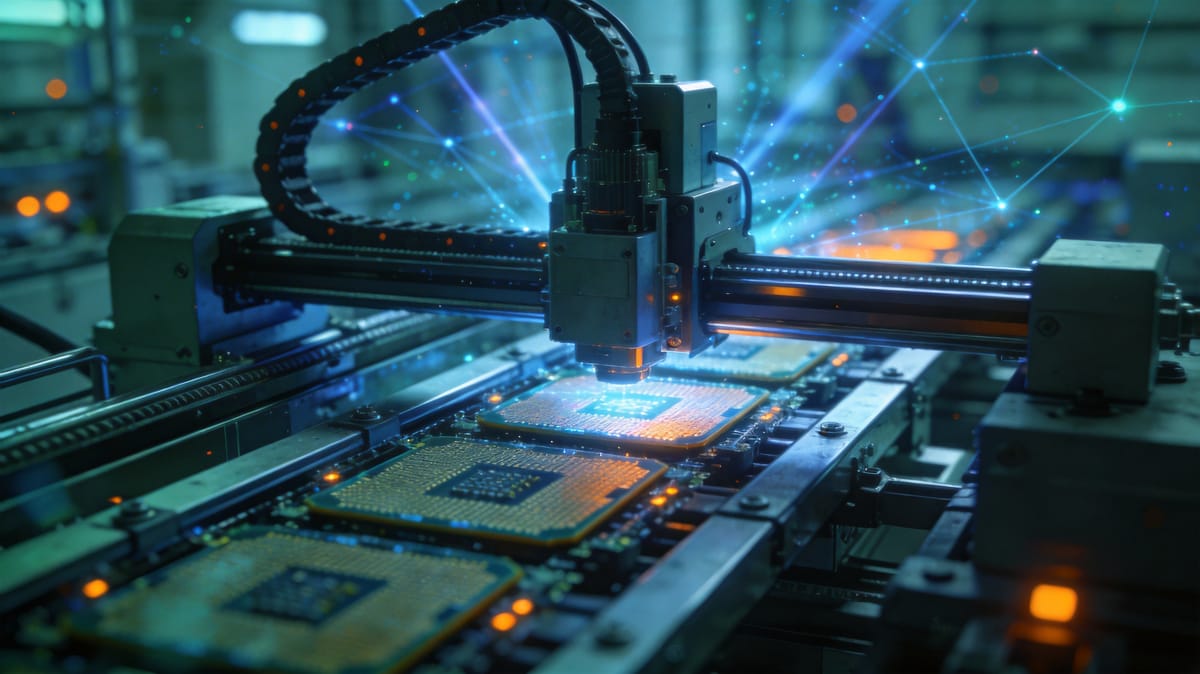
Nvidia is expanding its supply chain strategy from silicon to photons. On March 2, the company announced a combined $4B investment—$2B each in Lumentum and Coherent—to secure priority access to optical technologies needed for next-generation AI data centers. Lumentum's stock rose about 8% on the news, while Coherent jumped more than 13%.
The two targets are well-established players in the photonics space. Lumentum is a leading U.S. designer and manufacturer of optical and photonic components, including VCSELs for 3D sensing and high-speed lasers for data communications. Coherent is one of the largest industrial laser and photonic materials suppliers globally, with deep expertise in optical communications, photovoltaics, and precision manufacturing. Their shared focus—using light to generate, transmit, or sense information—has become increasingly relevant for AI infrastructure as physical bottlenecks in electrical signaling worsen.
Modern AI data center clusters now contain tens of thousands of GPUs. Interconnect bandwidth between chips, cross-server communication latency, and switch port density directly determine whether the entire system can operate efficiently. Traditional copper electrical interconnects suffer from signal attenuation and rising power consumption beyond certain distances. Optical interconnects can extend transmission from meters to hundreds of meters or more, while cutting per-bit energy consumption by one to two orders of magnitude. This is why silicon photonics has been positioned as the next logical step for data center interconnects.
Nvidia's $2B checks to each company are not merely financial bets—they are designed to secure manufacturing priority. By deploying significant capital, Nvidia aims to ensure its customized high-speed optical components sit at the top of Lumentum and Coherent's production queues, guarding against the kind of supply bottlenecks that plagued advanced packaging like CoWoS a couple of years ago.
The deeper play involves optical computing. Photonic technology theoretically enables higher energy efficiency in specific computational tasks, particularly matrix multiplications and neural network operators. While large-scale optical computing remains years away from commercial deployment, Nvidia clearly does not want to fall behind on this technology trajectory. If photonics represents the core of "AI infrastructure 2.0," this investment is essentially purchasing a seat at the table three to five years out.
The move also highlights a structural shift in the AI supply chain. Over the past few years, GPU shortages taught the industry the value of upstream investment. Nvidia has done this before—deep involvement with TSMC's advanced packaging during CoWoS constraints. But optical component supply chains are more fragmented and have longer technology iteration cycles than advanced packaging, making supply locking more challenging.
From a competitive landscape perspective, this investment places Nvidia at the center of the photonics supply chain and poses a question for other cloud and AI infrastructure players: if the largest AI chip company is already betting heavily on photonics, will competitors that don't follow be at a disadvantage in interconnect efficiency? That anxiety could accelerate adoption of optical interconnects across the data center industry.
Challenges remain. Both Lumentum and Coherent serve diverse markets from consumer electronics to industrial manufacturing. Ensuring Nvidia's customized high-performance optical devices receive production priority without disrupting existing customer deliveries is an execution hurdle. Additionally, photonics technology has not yet crossed the "cost threshold" for massive deployment—further cost reduction and reliability verification are required.
Positioned on a larger timeline, this deal marks photonics' transition from "frontier research" to "industrial-grade deployability." The $4B is not just buying equity stakes in two companies, but an entry ticket to a forming upstream ecosystem. As competition in AI infrastructure spreads from "chip performance" to "interconnect efficiency" and "system energy efficiency," the strategic value of photonics will only continue to rise.
Source: CNBC