STMicroelectronics Silicon Photonics Enters Mass Production PIC100 Platform Targets AI Data Centers
STMicroelectronics announced its advanced silicon photonics PIC100 platform has entered mass production, to be used by hyperscalers for optical interconnect in data centers and AI clusters. This marks the first large-scale deployment of silicon photonics in AI infrastructure.
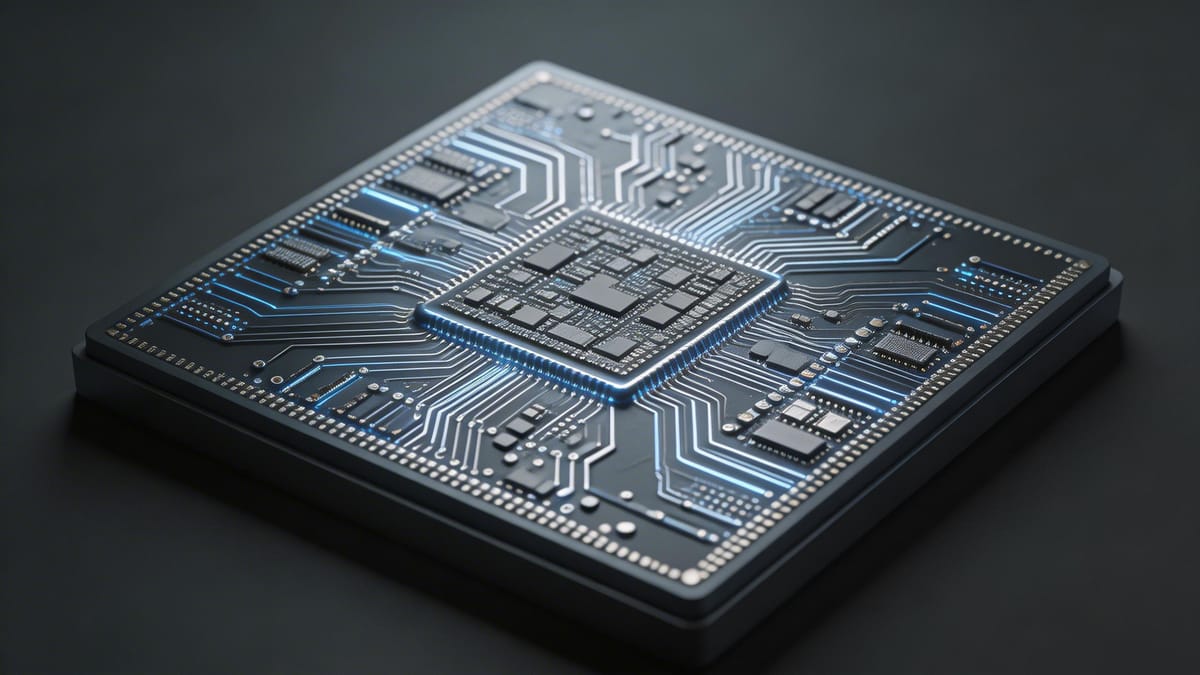
Global semiconductor leader STMicroelectronics announced on March 9, 2026, that its advanced silicon photonics PIC100 platform has entered mass production. The platform will serve hyperscale cloud service providers for optical interconnect in data centers and AI clusters. This milestone marks the first large-scale deployment of silicon photonics technology in AI infrastructure.
Silicon Photonics: Key Enabler for AI Data Centers
As AI model scales balloon dramatically, traditional copper interconnect is becoming a bottleneck. When thousands of GPUs require high-speed communication, the latency, power consumption, and bandwidth limitations of electrical signal transmission are increasingly problematic. Silicon photonics technology replaces electrical signals with optical signals, achieving higher bandwidth, lower power consumption, and longer transmission distances.
STMicroelectronics' PIC100 platform is one of the most advanced silicon photonics solutions in the industry. The platform integrates photonic devices with traditional CMOS circuits on the same chip, achieving a balance between high performance and low cost. "The launch of PIC100 will fundamentally transform AI data center network architecture," said an STMicroelectronics executive in a statement.
Why Now?
Industry observers note that silicon photonics entering mass production at this time is no coincidence. The explosive growth in AI workloads has created unprecedented demand. Training large language models requires thousands of GPUs working together, and communication bandwidth between GPUs directly determines training efficiency.
"When your AI cluster scales to thousands of nodes, optical interconnect is no longer optional — it's essential," said an unnamed semiconductor industry analyst. "STMicroelectronics clearly grasped this timing."
More importantly, the cost-effectiveness of silicon photonics is reaching a critical point. Previously, the technology was primarily used for long-haul telecommunications, but as manufacturing processes mature and production volumes increase, costs have dropped to where large-scale data center deployment is feasible.
Competitive Landscape
STMicroelectronics isn't the only player targeting the silicon photonics market. Intel, Cisco, and Marvell are also actively positioning themselves. However, STMicroelectronics' differentiation lies in its deep collaboration with major cloud service providers.
According to industry sources, the PIC100 platform has already secured large-scale orders from multiple major cloud service providers. These orders will be used to expand existing AI infrastructure to meet growing AI workload demands.
Implications for the AI Industry
STMicroelectronics' announcement has far-reaching implications for the entire AI industry. First, it validates that silicon photonics technology has matured enough for real-world production deployment. Second, it indicates that AI infrastructure investment is expanding beyond pure GPU procurement to comprehensive network architecture upgrades.
For the broader AI supply chain, large-scale adoption of silicon photonics means: larger AI model training becomes possible as communication between GPUs is no longer constrained; data center energy efficiency improves significantly as optical signal transmission consumes far less power than electrical; AI service prices may decline as infrastructure costs are optimized.
Reference: StockTitan